

Balanced nutrition means consistently eating the right proportions of macronutrients, micronutrients, and calories to support the body’s daily functions and long-term health. It is not about perfection or rigid rules. Rather, it is about building a sustainable eating pattern that fuels energy, prevents disease, and fits real life. This approach to balanced nutrition focuses on practical application, not restriction.
Key Takeaways
- A balanced diet covers four principles: energy balance, macronutrient proportion, moderation of harmful nutrients, and food variety.
- Most Americans fall short on vegetables, fiber, and potassium while exceeding recommended sodium and added sugar intakes.
- Protein, healthy fats, and complex carbohydrates each play a non-negotiable role — no single macronutrient should be eliminated.
- Micronutrients like vitamin D, calcium, and iron are just as critical as macros but far easier to overlook.
- Practical strategies — meal prepping, reading nutrition labels, hydrating consistently — close the gap between knowing and doing.
- Building everyday wellness habits that include whole foods, hydration, and mindful eating makes balanced nutrition a lifestyle rather than a phase.
What Balanced Nutrition Actually Means (Not Just a Definition)
The word “balanced” gets thrown around frequently, but most definitions stop at a vague list of food groups. A more useful framework breaks it into four core principles:
- Energy balance — Calories consumed should roughly match calories expended. Adjustment is necessary for goals like weight loss or muscle gain.
- Macronutrient proportion — Carbohydrates, proteins, and fats each need to be present in appropriate ratios. None should be eliminated.
- Moderation — Limiting sodium, added sugars, saturated fats, and alcohol is important. However, complete restriction is unnecessary.
- Diversity — Rotating a wide variety of foods ensures the body gets different vitamins, minerals, and phytonutrients across the week.
The World Health Organization defines a healthy diet as one built on minimally processed foods. These foods are low in unhealthy fats, free sugars, and sodium. That is a useful starting point. However, the real challenge is applying it at the grocery store, the restaurant table, and the work lunch break.
Understanding Calories and Why They Are Not the Whole Story
Calories measure energy. The commonly cited 2,000-calorie daily target is a benchmark. It is not a universal prescription. Individual needs shift based on age, biological sex, body composition, and physical activity.
| Group | Estimated Daily Calorie Needs |
|---|---|
| Sedentary adult woman | 1,600 – 2,000 kcal |
| Active adult woman | 2,000 – 2,400 kcal |
| Sedentary adult man | 2,000 – 2,600 kcal |
| Active adult man | 2,600 – 3,000 kcal |
| Teen girl (14-18, active) | 2,200 – 2,400 kcal |
| Teen boy (14-18, active) | 2,800 – 3,200 kcal |
Sources: Dietary Guidelines for Americans 2020-2025
Where calories come from matters just as much as how many. This is where the concept of “empty calories” becomes useful to understand. Empty-calorie foods, such as sugary sodas, processed snack cakes, and fried fast food items, deliver energy without meaningful nutrients. A 500-calorie bag of potato chips and a 500-calorie meal of grilled salmon, brown rice, and steamed broccoli are not equivalent. The numbers match, but the nutritional value differs dramatically.
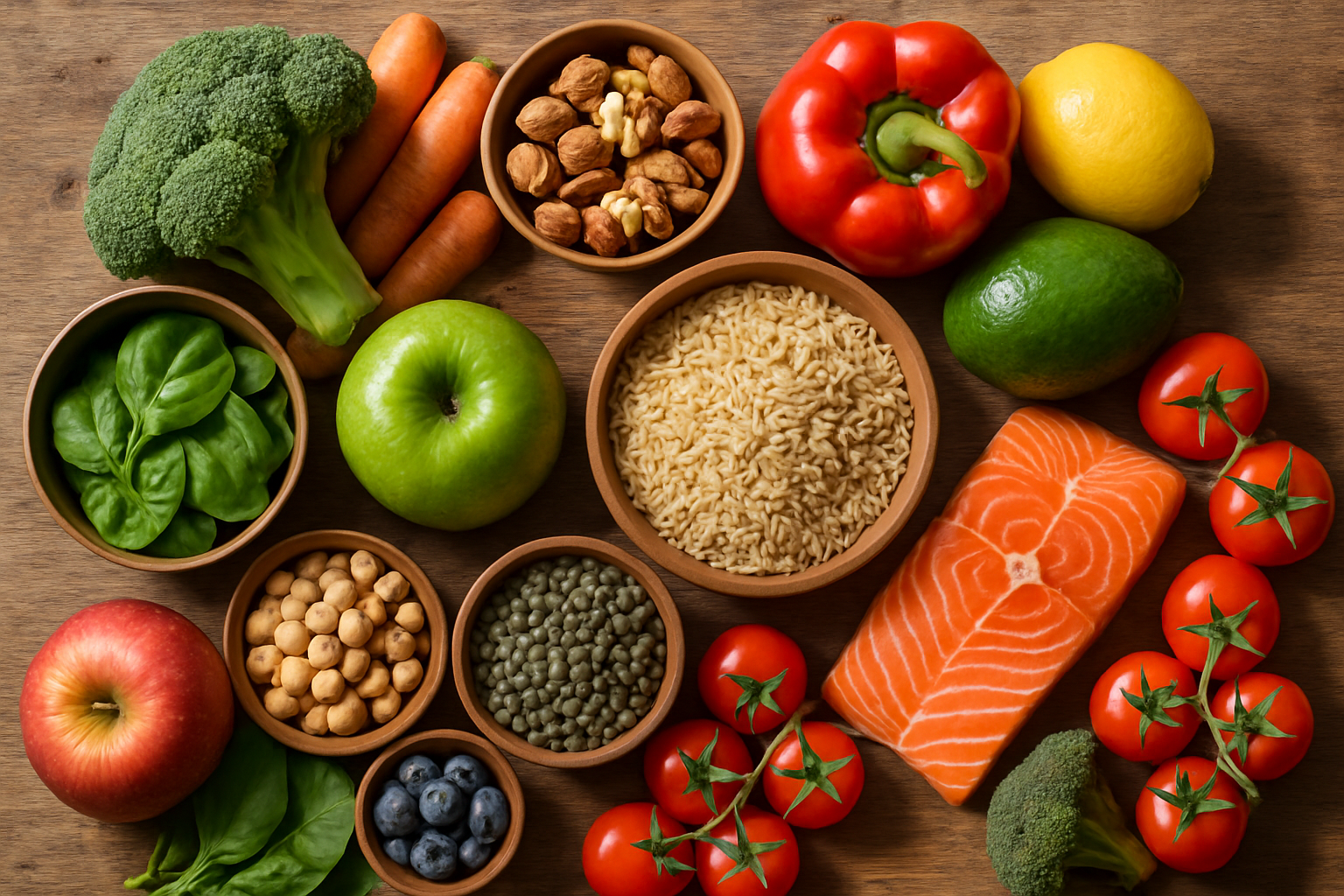
The goal is to build the majority of a day’s calories from nutrient-dense sources. Additionally, leave limited space for discretionary foods. The USDA MyPlate guidance suggests filling half the plate with fruits and vegetables. Roughly one quarter should contain whole grains. The remaining quarter should feature lean protein. This visual framework is easy to apply without counting every calorie.
Why Balanced Nutrition Matters More Than Most People Realize
The U.S. adult obesity rate sits at 40.3%, according to the CDC’s most recent National Health and Nutrition Examination Survey data. Diet is one of the primary drivers. Four of the ten leading causes of death in the United States include heart disease, type 2 diabetes, stroke, and certain cancers. Each has well-documented links to poor dietary patterns.
Beyond chronic disease, an unbalanced diet affects daily life in quieter ways. For example, people experience persistent fatigue and poor concentration. Immune response weakens. Wound healing and muscle recovery slow down. Mood instability increases with blood sugar swings. Risk of nutrient-deficiency conditions like anemia or osteoporosis rises significantly.
Balanced nutrition throughout the life course protects long-term health. It starts in childhood and continues through older age. This approach represents one of the most powerful preventive health tools available. The NIH’s Office of Dietary Supplements maintains extensive resources on how specific nutrients protect against disease across different life stages.
Globally, 2.6 billion people could not afford a healthy diet in 2024. Moreover, undernutrition costs the world economy at least $3.5 trillion annually. In the United States, food access and affordability remain real barriers for millions of families. Therefore, practical, budget-conscious strategies matter as much as nutritional theory.
What to Eat for Balanced Nutrition: Food Groups, Macros, and Micros
Balanced Nutrition: Macronutrient Targets to Aim For
Rather than eliminating any macronutrient, the goal is proportion. General evidence-based targets for healthy adults include these guidelines:
- Carbohydrates: 45-65% of total daily calories. Prioritize whole grains, legumes, fruits, and vegetables over refined grains and added sugars.
- Protein: 10-35% of total daily calories. For most adults, 0.8 grams per kilogram of body weight is the minimum. Active individuals need significantly more.
- Fats: 20-35% of total daily calories. Emphasize unsaturated fats from sources like olive oil, avocados, nuts, and fatty fish.
As of 2025, “good source of protein” is the top criterion Americans use when defining a healthy food. Consumer behavior research confirms this instinct. It tracks with science, since protein supports muscle maintenance, satiety, and metabolic function.
Building the Plate: Food Groups to Prioritize for Balanced Nutrition
Vegetables and Fruits
Aim for at least 2.5 cups of vegetables and 2 cups of fruit per day. Variety matters significantly here. Dark leafy greens like spinach and kale deliver iron, folate, and vitamins K and C. Orange vegetables like carrots and sweet potatoes are rich in beta-carotene. Furthermore, berries, citrus, and apples bring fiber, vitamin C, and antioxidants that support cardiovascular health.
Whole Grains
At least half of daily grain intake should come from whole grain sources. Examples include oats, brown rice, quinoa, whole wheat bread, and barley. Whole grains retain fiber and B vitamins that are stripped out during processing.
Lean Proteins
Chicken breast, turkey, eggs, fish, legumes, and tofu are reliable protein anchors. Additionally, fatty fish like salmon and sardines deliver omega-3 fatty acids. These are associated with reduced inflammation and better heart health.
Dairy and Alternatives
Low-fat dairy or fortified plant-based alternatives like unsweetened almond or soy milk provide calcium and vitamin D. Two nutrients that a large portion of Americans are deficient in.
Micronutrients: The Part Most Diets Get Wrong
Macros get all the attention. However, micronutrient gaps are widespread and often overlooked. Common shortfalls in the American diet include:
- Vitamin D — supports bone health and immune function. Found in fatty fish, fortified milk, and egg yolks.
- Calcium — critical for bone density. Found in dairy, broccoli, kale, and fortified foods.
- Iron — essential for oxygen transport. Found in red meat, beans, lentils, and fortified cereals.
- Potassium — important for blood pressure regulation. Found in bananas, potatoes, and avocados.
- Magnesium — involved in hundreds of enzymatic reactions. Found in nuts, seeds, and leafy greens.
Foods to Limit and Why
Cutting certain foods entirely is rarely realistic or necessary. The focus should be on moderation rather than elimination. These categories deserve attention:
- Sodium: The recommended daily limit is 2,300 mg. However, most Americans consume significantly more. Most of this sodium comes from packaged foods, canned goods, and restaurant meals. High sodium intake is a primary driver of hypertension.
- Added sugars: The American Heart Association recommends no more than 25 grams per day for women and 36 grams for men. Sweetened beverages alone can push people well over this limit.
- Saturated and trans fats: Found in processed meats, fried foods, and baked goods. They are linked to elevated LDL cholesterol and cardiovascular disease risk.
- Ultra-processed foods: These products are engineered to override satiety signals. They tend to deliver excess calories, sodium, and sugar in one package.
Practical Steps to Build Balanced Nutrition Consistently
Knowing what to eat is the starting point. Getting it done consistently is the harder part. These strategies have proven useful in real-world settings:
Meal prep on a schedule
Set aside one or two hours on the weekend to work. Wash, chop, and pre-portion vegetables. Cook a batch of grains and marinate proteins. This removes daily decision fatigue. As a result, healthy choices become the easier option.
Read nutrition labels critically
Check the serving size first. Then look at sodium, added sugars, and fiber content. A product marketed as “low fat” may compensate with added sugar. In contrast, a “sugar-free” option might contain artificial sweeteners and excess sodium.
Prioritize hydration
Water is often the most neglected element of balanced nutrition. The Mayo Clinic recommends approximately 3.7 liters (about 125 ounces) of total water per day for adult men. Adult women need 2.7 liters (about 91 ounces) from all beverages and food sources combined. Chronic mild dehydration reduces cognitive performance and increases appetite.
Adopt flexible, sustainable dietary patterns
Nutrition experts increasingly recommend approaches like the Mediterranean diet. These are preferable to highly restrictive plans. The Mediterranean pattern emphasizes olive oil, fish, legumes, vegetables, fruits, and whole grains. It allows for moderate wine and limited red meat. It has robust evidence supporting it for cardiovascular protection, cognitive longevity, and weight management.
Budget-conscious strategies
Frozen vegetables and fruits are nutritionally equivalent to fresh options. They cost significantly less. Canned beans, lentils, and tuna are affordable protein sources. Buying seasonal produce and planning meals around weekly sales reduces food costs without sacrificing quality.
Seven in ten Americans snack at least once daily. Over 40% snack multiple times per day. Therefore, treating snacks as mini-meals is important. Pair a protein with a complex carbohydrate like apple slices with almond butter or Greek yogurt with berries. This keeps blood sugar stable and prevents overeating at main meals.
Things to Know
- Sodium is the most commonly exceeded nutrient in the American diet. Most of it comes from packaged foods, not the salt shaker.
- Personalization matters significantly. Someone with gluten intolerance, for example, needs to source fiber and B vitamins from gluten-free whole grains like quinoa and brown rice rather than wheat.
- Protein is the most satiating macronutrient. Meals higher in protein tend to reduce snacking and overall calorie intake naturally.
- The Mediterranean diet has the strongest body of long-term research supporting it among any named dietary pattern. Researchers at Harvard T.H. Chan School of Public Health have documented this extensively.
- Reading a food label is a skill, not intuitive knowledge. Front-of-package health claims are often misleading. The nutrition facts panel tells the real story.
- Eating behavior matters as much as food choice. Eating slowly, at a table, without screens consistently produces lower calorie intake and higher meal satisfaction.
Frequently Asked Questions
Q: How many servings of vegetables does a person actually need each day?
Most adults need 2.5 to 3 cups of vegetables per day, based on a 2,000-calorie diet. The USDA recommends varying the types of vegetables consumed across the week. Cover dark-green, red and orange, beans and peas, starchy, and other vegetables. Monotony in vegetable choices means nutrient gaps accumulate over time.
Q: Is it possible to eat a balanced diet on a tight budget?
Yes, and prioritizing frozen produce, dried legumes, and whole grains makes it significantly more achievable. Frozen spinach, broccoli, and mixed berries are flash-frozen at peak ripeness. They retain their nutrient content. Dried lentils and chickpeas cost a fraction of animal proteins per gram of protein delivered. They are highly versatile.
Q: What is the difference between balanced nutrition and a restrictive diet?
Balanced nutrition is a sustainable long-term eating pattern, while a restrictive diet typically eliminates food groups or severely limits calories for a defined period. Restrictive diets tend to produce short-term results that are difficult to maintain. Balanced nutrition, when practiced consistently, supports stable energy, healthy weight, and disease prevention without the cycle of restriction and rebound.
Q: How does hydration fit into balanced nutrition?
Water is a nutrient, and adequate hydration is part of any complete approach to balanced nutrition. Dehydration impairs digestion, nutrient absorption, and satiety signaling. People who are mildly dehydrated often mistake thirst for hunger. This leads to unnecessary calorie intake. Drinking water before and during meals is a simple and effective practice.
Q: How quickly can dietary changes improve health markers?
Some markers, like fasting blood sugar and blood pressure, can show measurable improvement within two to four weeks of consistent dietary changes. Lipid panels and inflammatory markers typically take longer. Often, three to six months pass before meaningful improvements appear. Sustainable change matters more than rapid transformation. A modest improvement maintained for years produces far better outcomes than a dramatic shift that lasts weeks.
The Bottom Line on Balanced Nutrition
Balanced nutrition is not a destination — it is a set of daily decisions that compound over time into better health outcomes. Research is consistent. Diets rich in whole foods, varied across food groups, moderate in harmful nutrients, and matched to individual energy needs reduce the risk of the country’s most common chronic diseases. Furthermore, they improve quality of life in measurable ways.
The most practical next step is a simple audit. Look at what was eaten over the past three days and check whether vegetables, lean proteins, whole grains, and adequate water were present in each day. This gives a realistic starting point. From there, one or two targeted changes tend to work well. For example, swapping refined grains for whole grains or adding a vegetable to breakfast creates momentum. Subsequent changes become easier.
OhYourHealth exists to make that kind of evidence-based, actionable health information accessible to everyday readers. Whether someone is starting from scratch or fine-tuning an already decent diet, the goal remains the same. Consistent, informed choices support a longer and healthier life.