
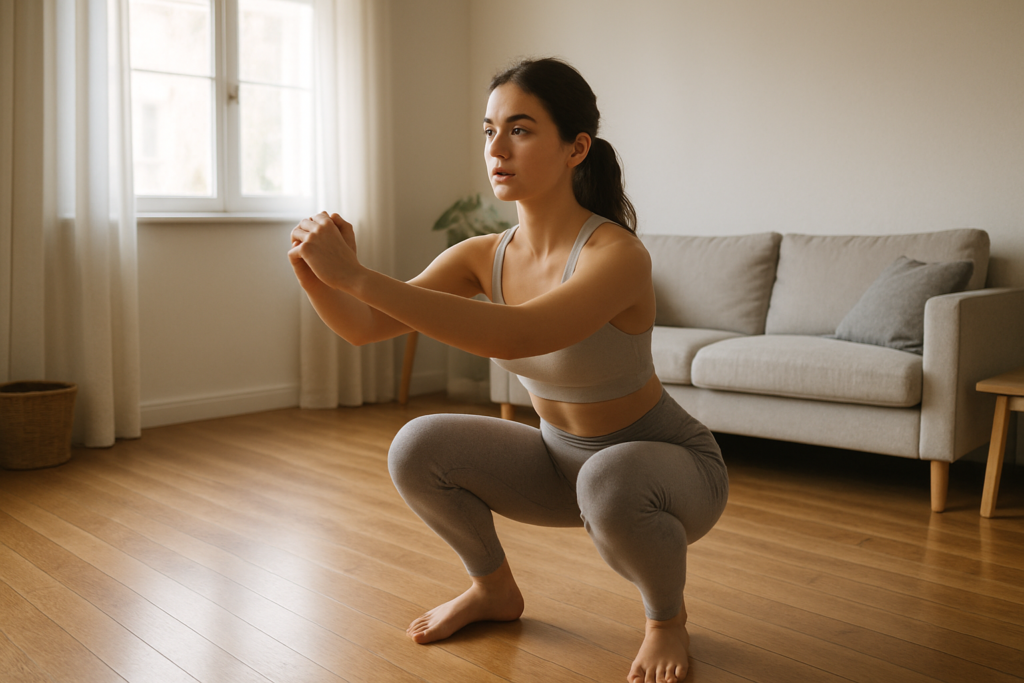
The best beginner fitness routines at home combine bodyweight movements, short workout windows, and consistent scheduling. These routines build strength and endurance without equipment. Starting with three to four sessions per week focuses on full-body exercises. This gives new exercisers the fastest, safest path to visible progress.
Getting fit at home sounds straightforward. However, most beginners stall within a few weeks because their routine is either too ambitious or too vague. The good news is that exercise science is clear on what works for people just starting out. None of it requires a gym membership, expensive equipment, or two-hour workout blocks.
What it does require is a realistic plan. Additionally, you need a basic understanding of how the body adapts to exercise. A few smart habits stacked around the workouts themselves also matter significantly.
This article breaks down exactly what beginners need. We cover weekly structure, specific exercises, and real guidance on progression. You’ll also learn about recovery and how to keep motivation from fading after the first month.
Why Home Fitness Routines Work Best for Beginners
The barrier to entry for home fitness is low. That matters more than most people realize. According to the CDC’s Physical Activity Guidelines, adults need at least 150 minutes of moderate-intensity aerobic activity per week. Add muscle-strengthening activities on two or more days. Most beginners can hit those numbers entirely from their living room.
Real psychological advantages exist too. Removing the commute to a gym eliminates one of the most common excuses for skipping workouts. Additionally, a 2019 study published in BMC Public Health found that perceived convenience is one of the top predictors of long-term exercise adherence. When the “gym” is ten feet from the couch, the friction disappears.
Furthermore, home workouts let beginners move at their own pace. New exercisers often feel social anxiety in a gym setting. That comfort level means better form focus, less rushing, and a more positive experience overall.
Core Principles Behind Effective Beginner Fitness Routines
Before picking specific exercises, understand the principles that make any beginner fitness routine work. These apply whether someone is 22 or 62. They explain why some programs produce results while others lead to burnout or injury.
Progressive Overload
This is the single most important concept in fitness. The body adapts to stress. Therefore, workouts must gradually increase in difficulty. For beginners, that usually means adding reps or reducing rest time. You can also progress to harder variations of the same movement rather than jumping straight to heavy weights.
Compound Movements First
Compound exercises work multiple muscle groups at once. Squats, push-ups, rows, and hinges deliver more results per minute than isolated exercises like bicep curls. The American College of Sports Medicine consistently recommends compound, multi-joint movements as the foundation of strength programs for all fitness levels.
Recovery Is Part of the Program
Muscles do not grow during a workout. They grow during rest. Beginners who train every single day without rest days typically plateau faster. Nagging injuries also develop more easily. Scheduling at least two full rest days per week is not laziness. It is science.
Consistency Over Intensity
Three moderate workouts completed every week for three months will always outperform seven brutal sessions in January followed by nothing in February. Building everyday wellness habits becomes critical. The workout itself is only one piece of a larger lifestyle puzzle.
A Practical 4-Week Beginner Home Workout Schedule
The following schedule is built around three full-body workout days per week. Active recovery fills other days. Active recovery can mean a 20-minute walk, light stretching, or yoga.
| Day | Focus | Duration |
|---|---|---|
| Monday | Full-Body Strength A | 30 min |
| Tuesday | Active Recovery / Walk | 20 min |
| Wednesday | Full-Body Strength B | 30 min |
| Thursday | Rest or Yoga | 20 min |
| Friday | Full-Body Strength A | 30 min |
| Saturday | Cardio / Bodyweight Flow | 25 min |
| Sunday | Full Rest | – |
Workout A: Push and Hinge Focus for Beginner Fitness
- Bodyweight Squats: 3 sets of 12 reps
- Push-Ups (or knee push-ups): 3 sets of 8-10 reps
- Glute Bridges: 3 sets of 15 reps
- Superman Hold: 3 sets of 10 reps
- Plank: 3 sets of 20-30 second holds
Workout B: Pull and Lunge Focus for Beginner Fitness
- Reverse Lunges: 3 sets of 10 reps per leg
- Resistance Band Rows (or towel rows): 3 sets of 12 reps
- Hip Hinges / Romanian Deadlift (bodyweight): 3 sets of 12 reps
- Dead Bug Core: 3 sets of 8 reps per side
- Side Plank: 2 sets of 20 seconds per side
Rest 60-90 seconds between sets. During weeks three and four, reduce rest to 45-60 seconds. Add one extra set to two of the exercises.
The Best Individual Exercises for Beginner Fitness Routines and Why They Make the List
Not every popular exercise belongs in a beginner program. The following movements were selected based on their safety profile for untrained individuals. Their effectiveness and how well they translate to everyday functional movement also matter. These create the best beginner fitness routines.
Bodyweight Squat
The squat mimics sitting down and standing up. This makes it one of the most transferable exercises to real life. It targets the quads, hamstrings, glutes, and core simultaneously. Beginners should focus on keeping their chest up. Knees should track over toes.
Push-Up
Few exercises build upper body and core strength as efficiently as the push-up. Knee push-ups are a completely valid starting point. Progressing from knee push-ups to full push-ups to decline push-ups offers months of built-in progression without any equipment.
Glute Bridge
This exercise activates the posterior chain, specifically the glutes and hamstrings. These muscles tend to be underworked in people who sit for long periods. Strong glutes also reduce lower back strain. This makes it one of the most injury-preventive exercises in any beginner fitness routine.
Plank
Core stability is foundational. A plank trains the deep stabilizing muscles of the spine. Sit-ups and crunches do not achieve this same result. Starting with 20-second holds and working toward 60 seconds is a realistic progression for the first four weeks.
Resistance Band Row
Pulling movements are often neglected in beginner routines. This leads to muscle imbalances over time. A simple resistance band or even a rolled-up towel anchored around a door handle allows beginners to train the upper back from home.
According to the National Academy of Sports Medicine, imbalances between pushing and pulling strength are a leading cause of shoulder injuries. Building rows into your program from day one addresses that risk early.
Things to Know
- Soreness is normal, but sharp pain is not. Delayed onset muscle soreness (DOMS) typically peaks 24-48 hours after a new workout. Sharp or joint-specific pain during exercise is a signal to stop and assess form.
- Workout clothes and a yoga mat are the only real equipment needed to get started. A resistance band set costs under $20 and dramatically expands exercise options.
- Warm-ups matter more for beginners. Spend 5 minutes on light cardio and dynamic stretching before each session. This reduces injury risk and improves performance.
- Nutrition and hydration are not optional extras. Protein intake around 0.7 to 1 gram per pound of bodyweight supports muscle recovery. New exercisers often underprioritize this.
- Sleep quality directly impacts workout results. Research from the NIH on sleep and physical performance shows that inadequate sleep reduces strength output. It also slows recovery and impairs motivation. Reading about what sleep habits improve wellness and energy levels can make a measurable difference in progression speed.
- Progress photos and a workout log are more reliable than scale weight for beginners tracking early results. Muscle gain and fat loss can offset each other on the scale.
How to Progress Beyond the First Month of Beginner Fitness
After four weeks of consistent training, the body will have adapted significantly. Workouts that felt difficult in week one will feel manageable by week four. That adaptation is a success signal, not a plateau. Therefore, introduce new challenges before the body fully adjusts.
Options for week five and beyond include:
- Adding a fourth training day focused on a specific area such as core or mobility
- Introducing tempo training (slowing down the lowering phase of each rep to 3-4 seconds)
- Adding light dumbbells or a resistance band to previously unweighted movements
- Progressing to harder exercise variations (standard push-ups to archer push-ups, regular squats to single-leg squats)
At this stage, revisit the broader wellness picture. Programs on sites like OhYourHealth.com are built around the idea that fitness is one component of a larger wellness system. Pairing a consistent workout routine with sound sleep, stress management, and nutrition creates compound results. Individual habits cannot deliver the same outcomes alone.
Common Mistakes That Stall Beginner Fitness Progress
Skipping the Warm-Up
Jumping straight into squats or push-ups with cold muscles increases injury risk. It also reduces performance significantly. A five-minute warm-up is non-negotiable.
Doing Too Much Too Soon
The Mayo Clinic’s exercise guidelines recommend that beginners start with shorter sessions. Gradually build volume rather than starting with long, intense workouts that are hard to sustain.
Neglecting Mobility and Flexibility
Tight hips and a stiff thoracic spine are common in people who sit at desks all day. Spending 10 minutes on mobility work after each session improves movement quality significantly. Injury risk also reduces over time.
Treating Rest Days Like Failures
Rest days are where adaptation happens. A beginner who feels guilty for taking rest days often ends up overtrained. Burnout typically follows within six weeks.
Ignoring Sleep as Part of Your Plan
This is one of the most underestimated recovery tools available. Poor sleep blunts the hormonal response to exercise, particularly growth hormone release. Growth hormone peaks during deep sleep. Incorporating better sleep practices is just as important as the workout itself.
The Bottom Line on What Are the Best Beginner Fitness Routines at Home
What are the best beginner fitness routines at home comes down to this: full-body compound movements, three to four days per week, with built-in progression and genuine recovery. The specific exercises matter less than the consistency and structure around them.
For anyone starting from scratch, the four-week schedule outlined above gives a clear, manageable entry point. Pairing it with broader lifestyle improvements is what separates people who see real results. Better sleep, consistent hydration, and everyday wellness habits reinforce the work done during each session.
The action step is simple: pick a start date this week. Set three workout reminders in your phone. Complete the first session before evaluating whether the program feels right. Progress builds after showing up, not before.