
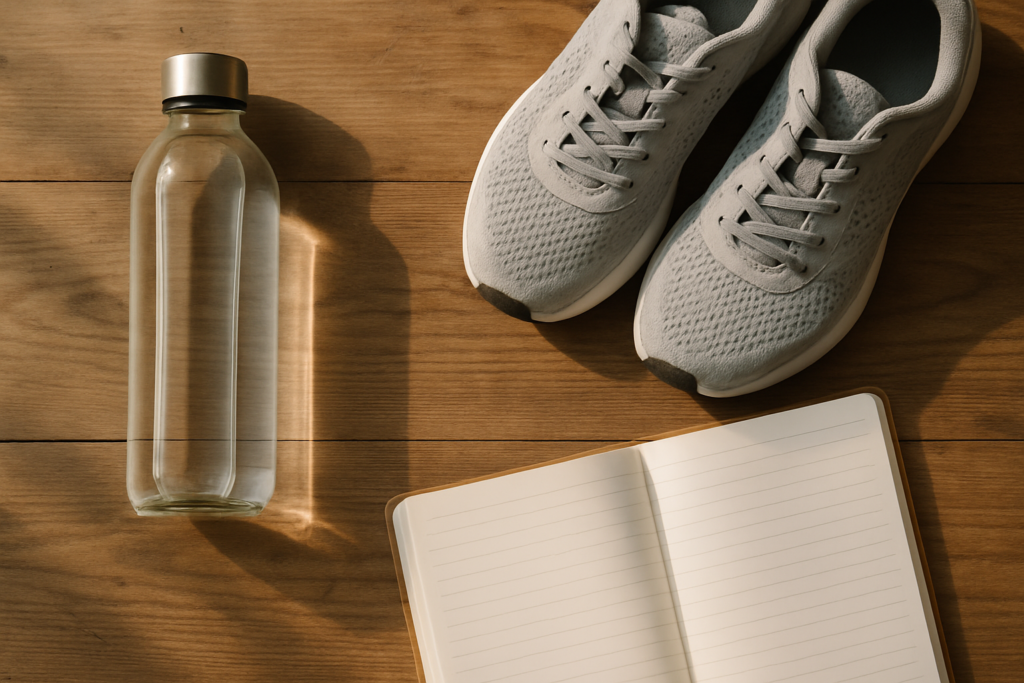
Healthy lifestyle habits are the daily behaviors and routines that, practiced consistently, reduce the risk of chronic disease, support mental well-being, and improve overall quality of life. Research from the CDC confirms that lifestyle choices account for a significant portion of preventable illness in the United States. Therefore, small, repeatable habits prove far more powerful than occasional overhauls.
The problem most people encounter is not knowing which habits to prioritize or how to make them last beyond a few weeks. This article breaks down the science-backed fundamentals. It explains what the research actually says. Additionally, it provides practical strategies for building routines that hold up long-term.
Why Daily Healthy Lifestyle Habits Outperform Short-Term Wellness Trends
Wellness trends come and go while the basics stay relevant for a simple reason: sustainable change happens through repetition, not intensity. A 2019 study published by University College London found that habits take an average of 66 days to form. However, this varies widely depending on the behavior and the individual.
Short-term cleanses, 30-day challenges, and extreme diets can produce initial results. In contrast, they rarely address the underlying behavioral patterns that determine long-term health. The most effective approach involves building a small set of foundational habits and stacking them over time.
The Role of Environment in Building Healthy Lifestyle Habits
What surrounds a person shapes what they do. James Clear, author of “Atomic Habits,” describes this principle as “environment design.” The goal is to make healthy choices the easy choices. This looks like keeping water on the desk, prepping meals on Sunday, or setting out workout clothes the night before. The environment acts as a cue, and cues drive behavior without requiring willpower.
Why Motivation Alone Does Not Work for Healthy Lifestyle Habits
Motivation is a feeling. It rises and falls based on mood, energy, sleep, and stress. Habits, on the other hand, become automatic over time and require less conscious effort to maintain. Relying solely on motivation to sustain healthy lifestyle habits is one of the most common reasons people quit. Therefore, systems, not feelings, keep routines alive.

The Core Healthy Lifestyle Habits With the Strongest Evidence
Not every wellness practice carries equal scientific weight. The following habits have consistent, strong evidence behind them across multiple large-scale studies.
Nutrition: Building Healthy Lifestyle Habits Around Food Patterns
Eating patterns matter far more than individual food choices. The NIH National Institute on Aging outlines that diets rich in vegetables, fruits, whole grains, lean proteins, and healthy fats are associated with reduced risk of heart disease, diabetes, and cognitive decline.
Rather than following rigid rules, the goal is building what researchers call “dietary patterns.” This means consistent tendencies toward whole foods rather than perfection at every meal. For readers building this foundation, exploring balanced nutrition as a daily framework is a practical next step. This resource goes deeper into macronutrient balance and meal planning strategies.
Key nutrition habits supported by evidence:
- Eating at least five servings of vegetables and fruit daily
- Prioritizing fiber from whole grains, legumes, and vegetables
- Limiting added sugar to under 25 grams per day (per AHA guidelines)
- Choosing water or unsweetened beverages over sugary drinks
- Practicing portion awareness rather than calorie obsession
Physical Activity: How Much Movement Supports Healthy Lifestyle Habits
The U.S. Department of Health and Human Services recommends 150 minutes of moderate-intensity aerobic activity per week for adults. Additionally, plan two days of muscle-strengthening activity. This works out to about 22 minutes of moderate movement per day, which is achievable even for people with demanding schedules.
Walking, cycling, swimming, and strength training all qualify. The key is consistency over intensity. A person who walks briskly for 25 minutes five days a week will see greater long-term benefit than someone who does one intense workout and burns out.
Sleep: The Underrated Pillar of Healthy Lifestyle Habits
Sleep is where the body repairs itself, consolidates memory, and regulates hormones including those that control hunger and stress. The CDC recommends that adults get seven or more hours of sleep per night. Yet roughly 35% of American adults report regularly sleeping fewer than seven hours.
Poor sleep is directly linked to increased risk of obesity, type 2 diabetes, cardiovascular disease, and depression. Prioritizing sleep is not optional when building genuinely healthy lifestyle habits.
Practical sleep habits:
- Going to bed and waking at consistent times, even on weekends
- Keeping the bedroom cool, dark, and quiet
- Avoiding screens at least 30 minutes before bed
- Limiting caffeine after 2:00 PM
Mental Health and Stress Management for Healthy Lifestyle Habits
Physical health and mental health are not separate systems. Chronic stress elevates cortisol, suppresses immune function, disrupts sleep, and increases the likelihood of inflammation. Managing stress is a direct health intervention, not a luxury.
Practices like mindfulness meditation, journaling, and even regular social connection have documented effects on stress hormones and emotional resilience. According to Mayo Clinic, regular stress management practices reduce symptoms of anxiety. Furthermore, they help regulate the body’s stress response over time.
Building Healthy Lifestyle Habits: A Practical Framework
Understanding which habits matter is only half the equation. The harder part is building them into daily life in a way that actually holds.
| Strategy | What It Means | Why It Works |
|---|---|---|
| Habit stacking | Attaching a new habit to an existing one | Leverages existing neural pathways |
| Starting small | Beginning with 2-minute versions of habits | Reduces resistance and builds momentum |
| Tracking progress | Using a journal or app to log habits | Creates accountability and visible progress |
| Social accountability | Sharing goals with another person | Increases follow-through by up to 65% |
| Scheduling | Blocking time in a calendar | Removes decision fatigue from the equation |
How to Use Habit Stacking for Healthy Lifestyle Habits
Habit stacking works by pairing a new behavior with something already automatic. For example: “After I pour my morning coffee, I will drink a full glass of water.” The existing habit (coffee) becomes the trigger for the new one (hydration). This technique, popularized by behavioral researchers, is one of the most reliable ways to attach new behaviors to daily routines.
The Role of Identity in Building Healthy Lifestyle Habits Long-Term
Behavioral researchers consistently find that identity-based change outperforms goal-based change. Instead of saying “I want to run a 5K,” shift to “I am someone who moves every day.” This reframes the behavior as an expression of who the person is, not just something they are trying to achieve. Therefore, this subtle shift significantly affects persistence.
Everyday Wellness: Small Healthy Lifestyle Habits That Add Up
Not every health-building behavior requires a gym membership or a structured plan. Many of the most impactful habits are embedded into ordinary daily moments. For a broader look at how these behaviors fit together in real life, Oh Your Health’s resource on everyday wellness habits provides practical examples across nutrition, movement, and mental health.
Small but impactful daily habits include:
- Standing up and stretching every hour if working at a desk
- Taking the stairs instead of the elevator when possible
- Eating lunch away from screens to improve mindful eating
- Spending 10 minutes outdoors, ideally in natural light
- Limiting alcohol to within the CDC-recommended guidelines (one drink per day for women, two for men)
These micro-habits are easy to dismiss as too small to matter. However, compounded across weeks and months, they produce measurable changes in energy, mood, weight, and metabolic health.
Common Obstacles and How to Overcome Them
Even people who understand the science behind healthy lifestyle habits run into the same obstacles repeatedly. Recognizing these patterns early makes it easier to push through them.
Time constraints: Most people cite time as their top barrier. The solution is not finding more time but reducing the setup cost of each habit. Meal prepping on Sunday, laying out gym clothes the night before, and scheduling workouts like appointments all remove friction.
All-or-nothing thinking: Missing one day of a habit does not erase progress. Many people treat it as if it does. Research shows that missing once has no measurable impact on long-term habit formation. What matters is getting back on track the next day.
Social pressure: American social culture often centers on food and alcohol at gatherings, making healthy choices feel conspicuous. Planning ahead, bringing healthy options to events, or simply setting a personal benchmark and sticking to it quietly are all effective strategies.
Unrealistic expectations: People frequently expect results in days or weeks. The timeline for meaningful physiological change is closer to 8 to 12 weeks. Setting process-based goals (“I will walk three times this week”) rather than outcome-based goals (“I will lose 10 lbs”) keeps motivation more stable.
Things to Know
- Habit formation is not linear. Expect setbacks and plan for them rather than being surprised by them.
- Sleep deprivation can undo many of the benefits of diet and exercise. This happens by disrupting hormone regulation and increasing hunger hormones like ghrelin.
- Strength training is often underestimated. Building muscle increases resting metabolic rate and reduces injury risk, especially after age 40.
- Gut health influences mood. The gut-brain axis means that dietary habits directly affect mental wellbeing, not just physical health.
- Hydration affects cognitive performance. Even mild dehydration (1-2% loss of body water) can reduce concentration and increase perceived effort during tasks.
- Not all stress is bad. Short-term stress (called eustress) can improve performance and focus. The goal is managing chronic, ongoing stress, not eliminating all stress entirely.
Frequently Asked Questions
Q: How long does it actually take to build a healthy lifestyle habit?
Research suggests the average is around 66 days, though it can range from 18 to 254 days depending on the person and behavior.
The popular idea that it takes 21 days comes from a misreading of a 1960s self-help book. This is not supported by behavioral science. More complex habits like daily exercise take longer to become automatic than simpler ones like drinking more water. Consistency, not speed, is what matters.
Q: What is the single most impactful healthy lifestyle habit to start with?
There is no universal answer, but improving sleep quality is often the most foundational change because it affects every other area of health.
Poor sleep increases hunger and reduces willpower. It also impairs recovery from exercise and elevates stress hormones. For most people, fixing sleep first creates the energy and cognitive clarity needed to build other habits more effectively.
Q: Can healthy lifestyle habits reverse existing chronic conditions?
In many cases, lifestyle changes can meaningfully reduce symptoms, improve lab markers, and in some conditions like prediabetes, reverse progression entirely.
The NIH has published extensive research showing that type 2 diabetes can be prevented or delayed through diet and exercise in high-risk individuals. However, lifestyle habits complement, not replace, medical treatment for existing conditions.
Q: How do people stay consistent with healthy lifestyle habits when traveling or under stress?
The key is identifying two or three “minimum viable habits” that require little setup and committing to those even when routines break down.
For example, a person’s minimum viable set might be: drink water, get seven hours of sleep, and walk for 20 minutes. These are portable and low-cost, which means they survive disruptions that would eliminate more complex routines.
Q: Are expensive supplements necessary to support healthy lifestyle habits?
For most generally healthy adults in the United States, supplements are not necessary if they are eating a varied, nutrient-dense diet.
According to Mayo Clinic, food-first nutrition provides better absorption and a wider range of beneficial compounds than most supplements can replicate. Exceptions exist, including vitamin D for people with limited sun exposure and B12 for those following plant-based diets. However, these should be discussed with a healthcare provider.
The Bottom Line on Healthy Lifestyle Habits
Building healthy lifestyle habits is not about perfection or dramatic overhauls. It is about making consistent, evidence-based choices that compound over time into measurable improvements in physical health, mental clarity, energy, and longevity. The science is clear on which behaviors matter most: quality nutrition, regular movement, sufficient sleep, stress management, and staying hydrated.
Oh Your Health exists to make that science accessible, practical, and actionable for everyday people across the United States. The next step is simple: pick one habit from this article, start with the smallest possible version of it, and practice it daily for the next two weeks before adding another. Small, consistent action always wins over ambitious plans that stall.